Long Beach, California, warrant search and arrest records provide critical information about active warrants, recent arrests, criminal charges, and inmate status within the city. These records are maintained by multiple agencies, including the Long Beach Police Department, the Los Angeles County Sheriff’s Department, and the Superior Court of California. While some data is accessible online, other details require direct contact with law enforcement or court personnel. Understanding how to locate and interpret these records is essential for background checks, legal defense, employment screening, or personal safety. The process involves navigating county jail systems, court databases, and public safety portals, each with distinct search functions and data availability.
Unlike larger metropolitan areas with centralized public record hubs, Long Beach operates a Type 1 detention facility, meaning individuals are typically held for no more than 96 hours before transfer to Los Angeles County jails. This impacts where and how arrest data is stored. Active warrants are not published online by local police, but court systems maintain searchable criminal case records that include warrant status. Additionally, traffic violations, misdemeanor and felony charges, bench warrants, and probation records may appear in different databases. Knowing which agency holds specific data—and how to query it—ensures accurate and timely results. This guide provides exact steps, direct links, and field-specific instructions to retrieve reliable information from official sources.
How to Search for Active Warrants in Long Beach, California
Active warrants in Long Beach are not published on the police department’s website or any public law enforcement portal. The Long Beach Police Department does not offer an online warrant lookup tool. However, warrant information is embedded within criminal court records managed by the Los Angeles County Superior Court. These records include bench warrants, search warrants, and arrest warrants issued by judges. To view this data, users must access the court’s online case index, which requires a name or case number search. The system reveals whether a warrant is active, its type, issuance date, and associated charges.
Using the Los Angeles County Court Criminal Case Index
The primary method to check for active warrants is through the Los Angeles County Superior Court’s Criminal Case Index. This database contains all criminal filings, including those from Long Beach, since the city falls under the county’s judicial jurisdiction. The tool does not label entries as “active warrant,” but a case marked as “open” or “pending” with no disposition typically indicates an outstanding warrant. Users must register for a free account to perform searches.
- Go to https://www.lacourt.ca.gov/home
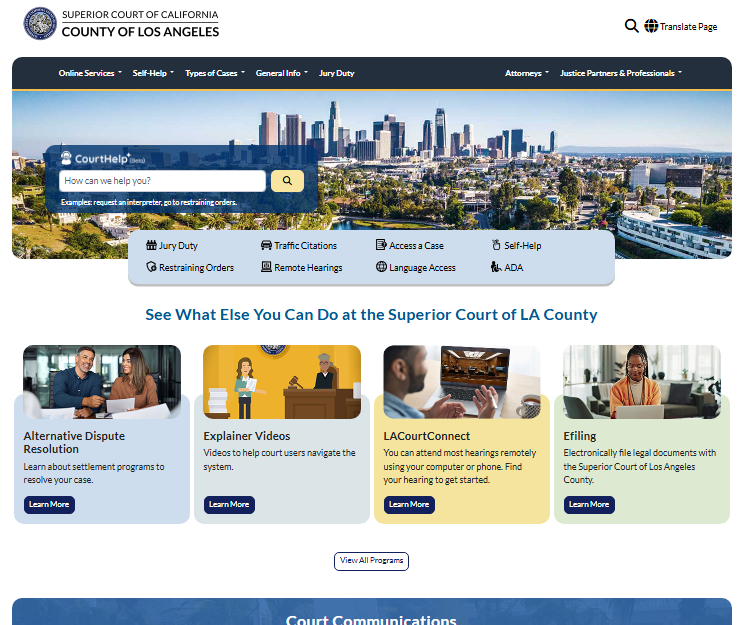
- Click “Register” if you don’t have an account. Provide name, email, and create a password.
- Log in and select “Criminal Case Index Search.”
- In the “Party Name” field, type the full legal name (e.g., “John Michael Smith”).
- Leave other fields blank unless you have a case number.
- Click “Search.”
The system returns a list of matching cases with the defendant’s name, case number, filing date, charge level (felony/misdemeanor), and status. If the status shows “Open – No Disposition,” an active warrant likely exists. Click the case number to view detailed docket entries, including warrant issuance dates and judicial comments.
Limitations of Online Warrant Searches
Not all warrant data is current or complete in the court index. Some older cases or those under seal may not appear. Additionally, the system does not distinguish between served and unserved warrants. For confirmation of an active warrant, individuals must contact the Long Beach Police Department Records Bureau or appear in person at the courthouse. Law enforcement officers are not required to disclose warrant status over the phone unless the inquiry is made by legal counsel or a verified representative.
- Warrants issued for failure to appear (bench warrants) are usually visible within 48 hours.
- Search warrants are not publicly listed due to investigative sensitivity.
- Federal warrants (e.g., FBI, DEA) are not included in the county database.
Alternative: Contacting the Long Beach Police Department
If online searches yield no results or uncertainty remains, the only reliable way to confirm a warrant is through direct contact. The Long Beach Police Department maintains a records division that handles public inquiries. However, they will not disclose warrant information to third parties without a subpoena or court order. Individuals checking their own status may request a records review in person.
- The Long Beach Police Department at 400 W Broadway, Long Beach, CA 90802.
- Go to the Records Bureau window during business hours (Monday–Friday, 8:00 AM–5:00 PM).
- Present a valid government-issued photo ID.
- Request a “Warrant Status Inquiry” for your name.
- Staff will verify identity and check internal systems.
Note: The department does not provide written confirmation unless required for legal proceedings. Results are communicated verbally. For legal representation, attorneys can submit a formal records request via Form LBPD-12, available at the front desk.
How to Access Long Beach Arrest Records
Long Beach arrest records are not published in a centralized online log. The Long Beach Police Department does not maintain a public arrest blotter or daily booking list. Arrest data is fragmented across multiple systems depending on custody status. Individuals arrested in Long Beach are initially processed at the Long Beach City Jail, a Type 1 facility designed for short-term holding. After 96 hours, detainees are either released or transferred to the Los Angeles County Jail system. This means recent arrest information may only be available through the county’s inmate search tool after transfer.
Searching the Los Angeles County Inmate Information Center
Since Long Beach lacks its own online arrest database, the most effective way to find recent arrest records is through the Los Angeles County Sheriff’s Department’s Inmate Information Center. This system lists all individuals currently in custody across county jails, including those transferred from Long Beach. The database updates every 15 minutes and includes name, booking date, charges, bail amount, and housing location.
- In the “First Name” field, type the person’s first name (e.g., “Maria”).
- In the “Last Name” field, type the last name (e.g., “Garcia”).
- Leave “Middle Name” and “Date of Birth” blank unless known.
- Click “Search.”
The results display a table with the inmate’s full name, age, sex, race, booking number, arrest date, arresting agency (e.g., “Long Beach PD”), charges, and bail status. Click the booking number to view mugshots, charge descriptions, and court dates. If no results appear, the person may still be in the Long Beach City Jail (within 96 hours of arrest) or has been released.
Limitations of Inmate Search for Long Beach Arrests
The Inmate Information Center only shows individuals currently in custody. Once released—whether on bail, citation, or dismissal—the record disappears from the active roster. Historical arrest data is not retained in this system. For past arrests, users must request records from the Long Beach Police Department or the Los Angeles County Sheriff’s Archives. Additionally, arrests made for minor offenses (e.g., traffic violations) may not result in booking and thus won’t appear in any database.
- Arrests not leading to custody (e.g., cite-and-release) are not searchable online.
- Misdemeanor arrests may be purged from public view after 10 years.
- Juvenile arrest records are sealed and inaccessible to the public.
Requesting Arrest Reports from Long Beach PD
For official arrest reports, including narrative details, officer names, and evidence logs, a formal records request is required. These documents are governed by the California Public Records Act (CPRA) and may contain sensitive information redacted for privacy or ongoing investigations.
- Download the “Public Records Request Form” from the Long Beach City website: https://www.longbeach.gov/

- Complete Section A with the requester’s name, address, and contact information.
- In Section B, specify “Arrest Report” and include the date, location, and name of the individual.
- Submit the form in person, by mail, or via email to police.records@longbeach.gov.
- Pay a $0.25 per page fee (waived for the first 10 pages).
Processing takes 10–15 business days. Reports include the arrest date, time, location, charges, arresting officer, and booking number. They do not include mugshots, which must be requested separately under a different process.
How to Perform a Long Beach Background Check
A Long Beach background check combines data from arrest records, court filings, warrant status, and inmate rosters to create a comprehensive profile of an individual’s criminal history. Unlike commercial background check services, which may use outdated or inaccurate data, official sources provide verified information directly from law enforcement and judicial systems. These checks are commonly used for employment, housing, licensing, and personal safety. The process requires checking multiple databases, as no single portal contains all relevant data.
Steps Criminal History Verification
To conduct a thorough background check, follow a structured approach that covers all potential sources of criminal data. Begin with the most current and accessible systems, then proceed to deeper records if needed. The goal is to identify any arrests, charges, convictions, or active warrants associated with the subject.
- Check Active Inmate Status: Use the Los Angeles County Inmate Search tool to determine if the person is currently in custody. Enter their full name and review results for matching entries. Note the booking date and charges.
- Search Court Records: Access the Los Angeles County Criminal Case Index to find past or pending criminal cases. Search by name and review each case for charge details, court dates, and disposition.
- Verify Warrant Status: Review court case status for “open” entries, which may indicate active warrants. Cross-reference with police records if necessary.
- Request Arrest Reports: If specific incidents are identified, submit a public records request to Long Beach PD for detailed arrest documentation.
- Check Sex Offender Registry: Visit the California Department of Justice Megan’s Law website to see if the individual is listed as a registered sex offender.
This method ensures coverage of both recent and historical criminal activity. It also avoids reliance on third-party sites that may charge fees or provide incomplete data.
Using the California Megan’s Law Database
The California Sex Offender Registry is a public database maintained by the Department of Justice. It lists individuals convicted of certain sex crimes who are required to register their address and personal details. Long Beach residents on the registry can be found using a name or location search.
- Go to https://www.meganslaw.ca.gov/
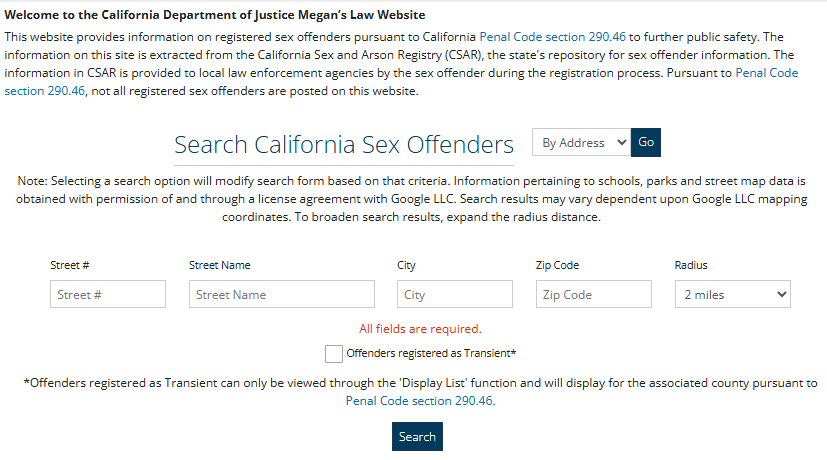
- Click “Search by Name.”
- Type the first and last name in the designated fields.
- Select “Long Beach” from the city dropdown menu.
- Click “Search.”
Results show the offender’s name, photo, registration status, offense type, and last known address. The site also provides a map view for geographic searches. Note: Not all registered offenders are listed publicly; some are excluded due to juvenile status or low-risk classification.
Limitations of Public Background Checks
Public background checks have legal and technical limitations. They do not include sealed records, juvenile adjudications, or expunged convictions. Additionally, traffic violations not resulting in arrest may not appear in criminal databases. Employers and landlords must comply with the Fair Credit Reporting Act (FCRA) when using this data for decisions, which requires consent and disclosure.
- Expunged records under Penal Code 1203.4 are not visible in court indexes.
- Arrests without conviction may still appear, but must be disclosed with context.
- Federal crimes (e.g., immigration, tax fraud) are not included in state databases.
How to Search Long Beach Inmate and Jail Records
Long Beach operates a temporary holding facility known as the Long Beach City Jail, but it does not maintain long-term inmates. All individuals arrested by the Long Beach Police Department are processed here and held for up to 96 hours. After this period, they are either released or transferred to the Los Angeles County Jail system. As a result, the current inmate status must be checked through the county’s online portal. The city jail does not offer an online roster or public booking log.
Using the Los Angeles County Jail Inmate Search
The Los Angeles County Sheriff’s Department provides a real-time inmate search tool that includes all individuals in custody across its 13 jail facilities. This system captures transfers from Long Beach and other local agencies. The database is updated every 15 minutes and includes comprehensive details about each inmate.
- In the “First Name” field, enter the person’s first name (e.g., “James”).
- In the “Last Name” field, enter the last name (e.g., “Wilson”).
- Optionally, enter the date of birth in MM/DD/YYYY format to narrow results.
- Click the “Search” button.
The system returns a table with columns for Name, Age, Sex, Race, Booking Number, Arrest Date, Arresting Agency, Charges, and Bail Amount. Click the booking number to view additional details, including mugshots, court dates, and housing location. If the arresting agency is listed as “Long Beach PD,” the individual was arrested within the city.
The Booking and Transfer Timelines
Arrests in Long Beach follow a strict custody timeline. Individuals are booked at the city jail within hours of arrest. If bail is posted, they may be released immediately. If not, they remain in custody until their arraignment, typically within 48 hours. If convicted or denied bail, they are transported to the Los Angeles County Jail within 96 hours. This means the inmate search tool may not show recent arrests until after transfer.
- Arrests made on Monday may not appear in the county system until Wednesday.
- Weekend arrests are processed on the next business day.
- Minors are transferred to juvenile detention centers, not adult jails.
Requesting Jail Records from Long Beach PD
For records of arrests that occurred within the past 96 hours and have not yet been transferred, contact the Long Beach Police Department directly. The Records Bureau maintains logs of recent bookings, though these are not published online.
- Call (562) 570-7260 and ask to speak with the Records Bureau.
- Provide the individual’s full name and date of birth.
- Request confirmation of booking status and location.
- If the person is still in city custody, ask for the expected transfer date.
Note: The department may require verification of the relationship or legal authority before disclosing information. Immediate family members or attorneys may receive limited details with proper identification.
How to Find Long Beach Court Records and Case Lookup
Long Beach court records are managed by the Los Angeles County Superior Court, which handles all criminal, civil, traffic, and family law cases within the city. These records include case filings, hearing dates, judgments, and warrant information. The court provides an online portal for public access, allowing users to search by name or case number. This is the most reliable source for criminal history, including felony and misdemeanor charges, probation status, and expungement records.
Searching the Los Angeles County Criminal Case Index
The Criminal Case Index is the primary tool for accessing Long Beach court records. It contains all criminal filings from 1980 to the present, including cases prosecuted by the Long Beach City Attorney and District Attorney. The system requires a free account but offers detailed docket information.
- Go to https://www.lacourt.org/
- Register for an account using your email and personal details.
- Log in and select “Criminal Case Index Search.”
- In the “Party Name” field, type the defendant’s full name (e.g., “David Lee Johnson”).
- Click “Search.”
Results show a list of cases with the case number, filing date, charge level, and status. Click the case number to view the full docket, including charges, court appearances, plea agreements, and final disposition. If the status is “Open,” the case is active and may involve an outstanding warrant.
Accessing Traffic and Misdemeanor Records
Traffic violations and misdemeanor offenses are also included in the criminal index. These cases are filed under the same system and can be searched using the defendant’s name. Common entries include DUIs, theft, vandalism, and domestic violence. Each record shows the violation code, fine amount, and court outcome.
- Search results include both felony and misdemeanor charges.
- Traffic cases are labeled with VC (Vehicle Code) sections.
- Failure to appear in court generates a bench warrant, visible in the docket.
Requesting Certified Court Documents
For legal proceedings, certified copies of court records may be required. These can be obtained in person at the Long Beach Courthouse or by mail.
- The Criminal Records Window at 2700 N. Broadway, Long Beach, CA 90806.
- Bring a valid ID and the case number.
- Request a “Certified Copy of Court Record.”
- Pay the fee (typically $25 per document).
- Receive the stamped and signed document.
Certified records are admissible in court and required for expungement, immigration, or employment verification.
| Long Beach Police Department |
| 400 W Broadway, Long Beach, CA 90802 |
| (562) 570-7260 |
| Monday–Friday, 8:00 AM–5:00 PM |
(FAQs) About Long Beach, California Warrant Search and Arrest Records
This FAQ section provides clear answers to common questions about finding arrest records, checking warrants, and accessing related public information in Long Beach, California. It is designed to help users quickly understand what records are available online, which require official requests, and how local and county systems manage criminal record data.
Can I search for Long Beach arrest records online for free?
Yes, but only through the Los Angeles County Inmate Information Center. This tool allows free searches by name and shows current inmates, including those transferred from Long Beach. However, it does not display historical arrests or individuals released from custody. For past arrests, you must request records from the Long Beach Police Department, which may charge a fee. The city does not maintain its own online arrest log, so the county system is the only free public option. Results include name, booking date, charges, and bail amount. If no match appears, the person may have been released or cited without booking.
How do I check if there is an active warrant for my name in Long Beach?
To check for an active warrant, use the Los Angeles County Criminal Case Index. Register for a free account and search for your name. Look for cases with a status of “Open – No Disposition,” which typically indicates an outstanding warrant. You can also visit the Long Beach Police Department Records Bureau in person with a valid ID to request a warrant status inquiry. Staff will check internal systems and verbally confirm results. Note that the department will not disclose warrant information over the phone to third parties. For legal certainty, consult an attorney who can access sealed or restricted records.
Are Long Beach mugshots available to the public?
Mugshots are not published on the Long Beach Police Department website. However, they may appear in the Los Angeles County Inmate Search tool if the individual is currently in custody. Clicking the booking number reveals a photo taken at the time of arrest. Once released, mugshots are removed from the online system. For archived photos, a formal records request must be submitted to the Long Beach PD. These requests are subject to approval and may be denied if the photo could interfere with an investigation or violate privacy rights. Commercial sites often republish mugshots, but their accuracy and legality vary.
How long are arrest records kept in Long Beach?
Arrest records in Long Beach are retained indefinitely by the police department unless sealed or expunged. The Los Angeles County Sheriff’s Department maintains inmate data only while the person is in custody. Court records are preserved permanently and accessible online. However, misdemeanor arrests may be restricted from public view after 10 years under California law. Expunged records under Penal Code 1203.4 are removed from public databases but remain accessible to law enforcement. Juvenile records are sealed automatically and cannot be viewed without a court order.
Can I get a copy of my own Long Beach arrest report?
Yes, you can request your own arrest report through the Long Beach Police Department’s Public Records Request process. Download the form from the city website, complete it with your details and the incident information, and submit it in person or by mail. There is a $0.25 per page fee, waived for the first 10 pages. Processing takes 10–15 business days. The report includes the date, location, charges, arresting officer, and narrative summary. You must present a valid ID when picking up the document. Third parties cannot request your report without written authorization.
Where do I go to find Long Beach probation or parole information?
Probation records for Long Beach are managed by the Los Angeles County Probation Department. Visit their website or call (562) 940-6200 for general inquiries. For specific cases, you must contact the assigned probation officer directly. Parole information is handled by the California Department of Corrections and Rehabilitation (CDCR). Use the CDCR Inmate Locator tool to search by name or CDC number. Only individuals on state parole will appear; county probationers are not included. Both systems require personal details for access and do not provide information to unauthorized parties.